


On this page
A fire alarm system detects a fire early and tells people to leave. The panel, the detectors, the manual call points, and the sounders are one system, and the useful distinction is whether the panel knows a whole zone or a single device. This sheet covers that split, the devices on the loop, and what a proper handover includes. PSS builds these systems to UL/FM standards, from one zone to a network of buildings.
What the design has to know
- The building. Floors, escapes, shafts, and the rooms where smoke will not behave like a corridor (kitchens, plant rooms, tall voids).
- Who must be told. Sounders everywhere, a voice message, the fire service, a monitoring centre, or the BMS.
- What else must happen. Door release, lift recall, fan shutdown, or a signal into a suppression system. Write it as a cause-and-effect, not as a hope.
- Conventional or addressable. The size of the building and the need to know the exact device decide this.
Conventional and addressable
| Conventional | Addressable | |
|---|---|---|
| What the panel reports | A zone, such as “first floor east” | The individual detector or call point |
| Wiring | A circuit per zone, plus sounder circuits | A loop that carries devices and, often, the alarm devices too |
| Finding the fire | Someone walks the zone | The panel names the device and its text location |
| Fits | A small building with few zones | Anything larger, or any site that must know the exact point |
The devices
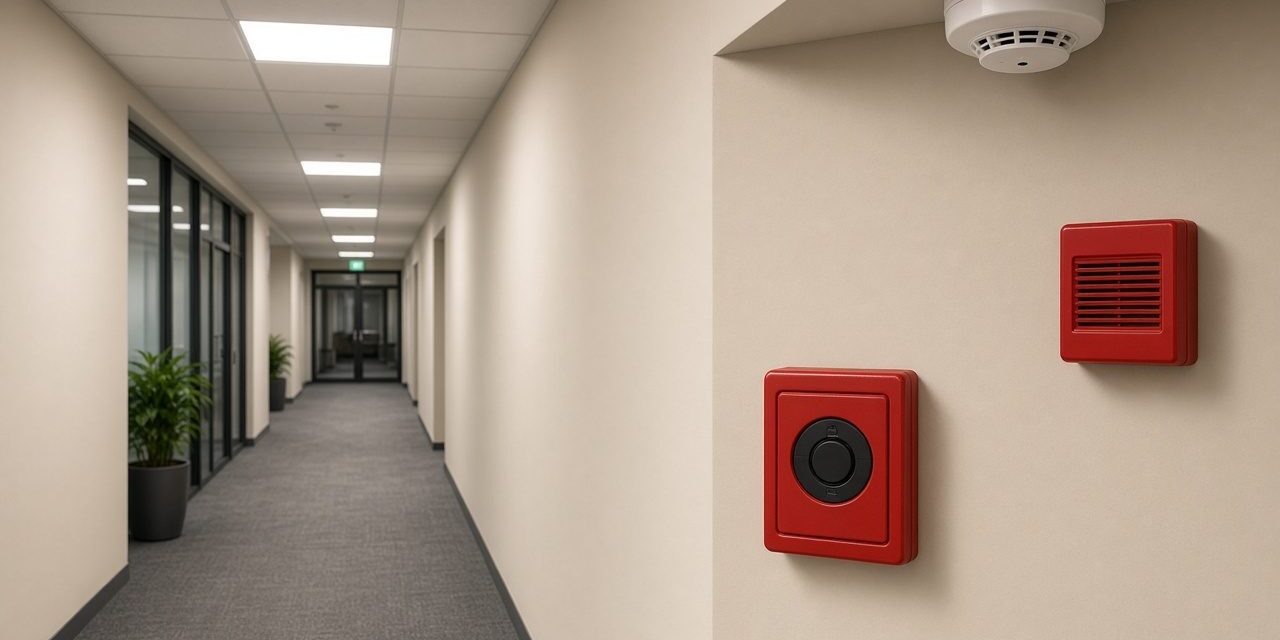
Smoke detectors cover most rooms. Heat detectors go where smoke is normal, such as a kitchen or a dusty plant room. Gas detection is a separate sensing job where the hazard is a leak rather than combustion products. Manual call points are the person’s override: anyone who sees a fire can raise the alarm without waiting for a detector. Sounders and strobes carry the warning into noisy or hearing-impaired areas. Where the building needs spoken instruction rather than a tone, the fire alarm hands that job to a voice-evacuation system.
Commissioning is not “power on, see a lamp”. Every device is tested, the cause-and-effect is proved, and the handover pack is what a compliance visit will ask to read. PSS commissions, tests, and hands over with those documents.
Practical fire-alarm design and handover notes
- Start with the fire strategy. Detector type, spacing, sounder coverage, cause-and-effect, and evacuation method follow the building risk and the applicable authority requirements.
- Label every point. An addressable text label must identify a real room or area. A conventional zone chart must be accurate enough for a responder to search the zone quickly.
- Test interfaces as a system. Door release, lift recall, smoke-control fans, suppression interfaces, monitoring outputs, sounders, and batteries need witnessed tests, not only continuity checks.
Handover should include approved drawings, device and zone lists, cause-and-effect, battery calculations, loop and sounder test results, panel configuration backup, fault log, and a maintenance plan. Never leave a disabled detector or bypassed output undocumented.
Common problems and how to fix them
The same detector false-alarms every week
It is in the wrong environment: steam, dust, insects, or a supply diffuser blowing across it. Change the type (heat instead of smoke) or move it. Silencing it every Monday trains the building to ignore the system.
The panel shows a fault and nobody knows which cable
On an addressable loop the panel names the device where the circuit broke. On a conventional zone it names only the zone, so the drawings have to be true. As-built zone charts on the wall next to the panel are part of the system, not paperwork for later.
Sounders run, but the doors stay locked
The interface to access control was never tested, or the release is wired to a relay that the cause-and-effect does not operate. Prove door release on a fire test day, with the doors that people actually use.
Frequently asked questions
Can I add one detector to a conventional zone later?
Often yes, if the zone has capacity and the device matches. You still will not know which detector operated, only the zone. If you need the exact room, that is an addressable system.
Does the BMS replace the fire panel?
No. The fire panel detects and alarms on its own. The BMS may display the event and run the agreed plant shutdowns. Life safety does not depend on the building network.
What should the handover include?
As-built drawings, the device list and labels, the cause-and-effect, the test records, and the panel logins held by the people who will maintain it.
Talk to PSS about fire detection
PSS designs, commissions, and maintains conventional and addressable fire alarm systems. Contact the PSS team to book a first site survey.
