


On this page
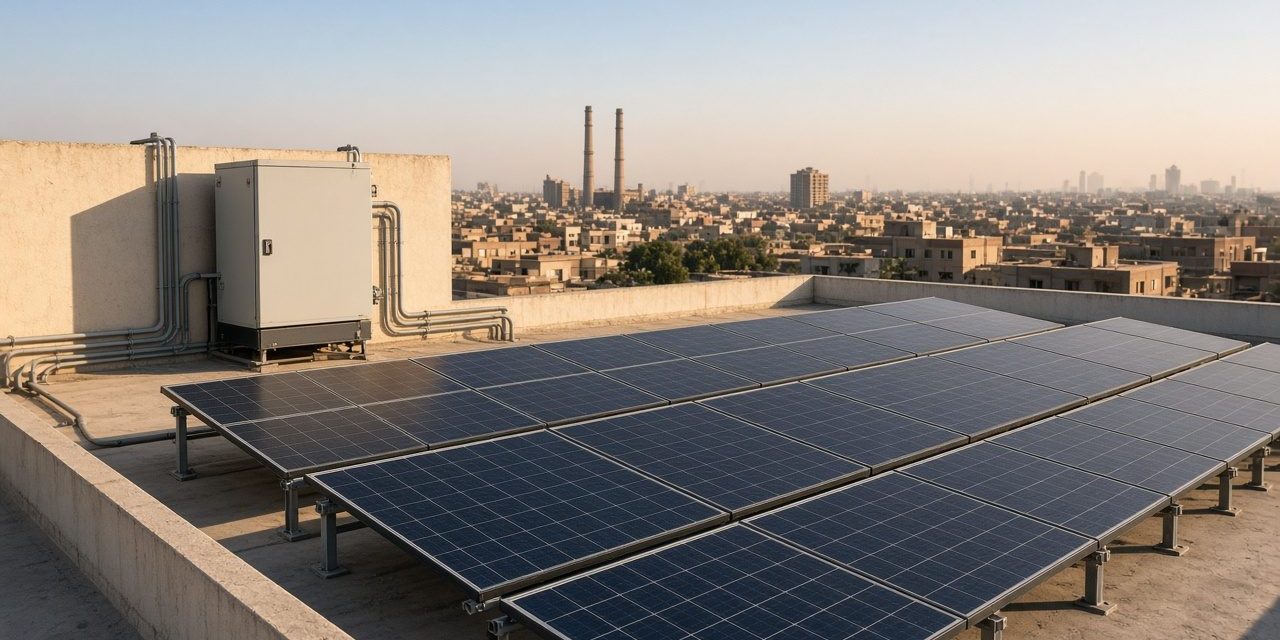
A photovoltaic system turns daylight into electricity for a building or a plant. The useful question is not “how many panels”, but which of the three arrangements the site actually needs: on-grid, off-grid, or hybrid. This sheet sets those three apart, names the hardware each one is built from, and says what net-metering registration adds.
What the survey has to settle first
- The roof or the land. Area, shading through the day, structure that can carry the array, and a path for the cables to the electrical room.
- The load profile. Daytime consumption can be offset directly. Night-time consumption needs storage or the grid.
- Whether the grid is there, and whether it may be used. Exporting energy is a utility agreement, not a feature of the inverter alone.
- What must stay up in an outage. A plain on-grid inverter stops when the grid stops. Backup is a hybrid or off-grid decision.
On-grid, off-grid, and hybrid
| On-grid | Off-grid | Hybrid | |
|---|---|---|---|
| Connected to the utility | Yes | No | Yes |
| Batteries | Usually none | Required | Optional, sized to the backup loads |
| Works during a grid outage | No. It shuts down | Yes, from the batteries | Yes, for the backed-up circuits |
| Usual aim | Cut the daytime bill, export the surplus | A site with no reliable grid | Lower bills, and keep selected loads running |
Panels and inverters
Modules are most often monocrystalline. Bifacial modules also collect light reflected onto the back face, which matters when the array is raised and the surface below is pale. The inverter is what makes the panel’s direct current usable. A string inverter serves a series of modules and fits an unshaded roof. A hybrid inverter does that and also charges a battery bank, which is the unit an on-grid-plus-backup design is built around.
Storage is a separate design from the array. The battery is sized for the circuits that must ride through the night or an outage, not for the whole building by default. It sits naturally next to the site’s UPS and generator: solar reduces what those two have to carry, and they still cover the hours and the failures solar cannot.
Net metering
Where the utility allows it, surplus daytime energy is exported and credited against later imports. That needs the right meter, an application, and an inverter that is allowed to run in parallel with the grid. PSS certified teams take a system from the survey and the design through installation, commissioning, and the net-metering documents the utility asks for. Export is not something to switch on and hope.
Practical design and handover notes
- Use an hourly load profile. Array energy, battery capacity, and export value depend on when the site consumes power, not only on the total monthly bill.
- Check DC and AC protection. Strings need correctly rated isolation, overcurrent protection where required, earthing, and cable routes. The inverter output needs its own AC isolation and protection.
- Design for maintenance. Leave safe access around modules, the inverter, and the battery. Label each string and keep the single-line diagram with the commissioning readings.
Before handover, verify string polarity and open-circuit voltage, insulation resistance, inverter alarms, anti-islanding behaviour, battery charge and discharge limits, and the utility meter arrangement. The final file should state which circuits are backed up and which are deliberately not.
Common problems and how to fix them
The system produces well in the morning and fades early
Shading has moved onto part of a string, and one shaded module limits the string it sits in. The layout has to keep strings out of the shade path, or split the shaded modules onto their own input. Cleaning matters too: dust on a flat roof cuts output long before a module “fails”.
The power cuts out whenever the grid cuts out
That is correct behaviour for an on-grid inverter. It must disconnect so it does not feed a dead line. Backup during an outage needs a hybrid inverter and a battery on the circuits that are supposed to stay up.
The bill barely moved
The array is generating while the site is empty, and the heavy load is at night, with no storage and no export credit. Match the design to the load profile before adding more modules.
Frequently asked questions
Will solar run the site during a blackout?
Only a hybrid or off-grid system, and only the circuits connected to the battery. A standard on-grid system switches off with the grid.
Do I still need a generator?
If the site must run for long cloudy periods or overnight without a large battery, yes. Solar and a generator solve different hours of the same problem.
What is the difference between a string inverter and a hybrid inverter?
A string inverter converts panel power for the building and the grid. A hybrid inverter also charges and discharges a battery, so selected loads can keep running when the grid is down.
Talk to PSS about solar
PSS designs and installs on-grid, off-grid, and hybrid solar systems, including net-metering registration. Contact the PSS team to book a first site survey.
